
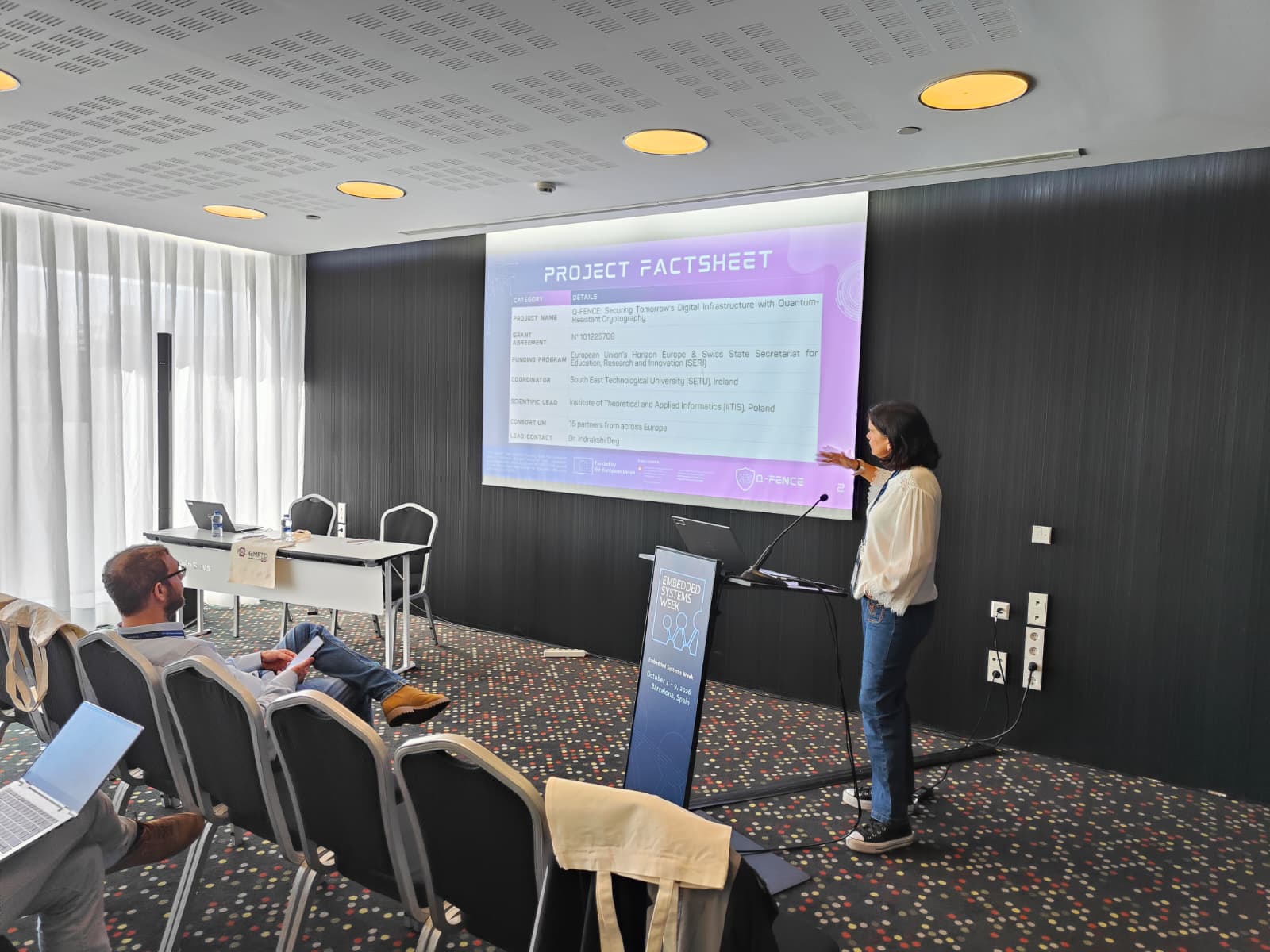
Piedad Brox, from the Instituto de Microelectrónica de Sevilla (IMSE-CNM, CSIC/US), presented the Q-FENCE project during the Workshop on European Efforts for Post Quantum Cryptography Migration and Standardisation in Embedded Systems, held on 9 October 2026 as a side event of Embedded Systems Week (ESWEEK) 2026. The workshop was organised by the PQC4eMRTD project.
The event brought together European research and innovation initiatives working to support the transition from conventional cryptography to Post-Quantum Cryptography (PQC). It provided an opportunity for projects to present their work, exchange knowledge, and discuss the challenges involved in preparing digital systems for the quantum era.
Addressing the challenges of the quantum era
As quantum computing technologies advance, widely used public-key cryptographic systems are expected to become increasingly vulnerable to attacks from sufficiently powerful quantum computers. This presents significant challenges for cybersecurity, data protection, and the long-term confidentiality of sensitive information.
In response, new post-quantum cryptographic schemes are being developed and standardised to help protect digital communications and systems against future quantum threats. However, adopting these solutions requires more than selecting new algorithms. Their implementation also involves adapting hardware and software platforms, addressing performance and compatibility requirements, and ensuring that new cryptographic mechanisms can be integrated into existing infrastructures.
These challenges are particularly relevant for embedded systems, where resources such as memory, processing power, and energy can be limited. Coordinated research and practical testing are therefore essential to support a secure and effective transition to post-quantum cryptography.
Presenting Q-FENCE’s contribution
During her presentation, Piedad Brox introduced the objectives of the Q-FENCE project, highlighting its progress and latest developments in advancing quantum-safe cybersecurity. The presentation contributed to the workshop’s broader discussions on European efforts to prepare cryptographic systems for the post-quantum era.
Q-FENCE is part of a wider European research and innovation landscape working to address emerging cybersecurity challenges. By developing and validating approaches to quantum-resistant cryptography, the project aims to contribute to more secure and resilient digital technologies.
The workshop also offered an opportunity to exchange perspectives with other European initiatives addressing PQC migration and standardisation, helping to connect complementary research efforts and share knowledge across the community.
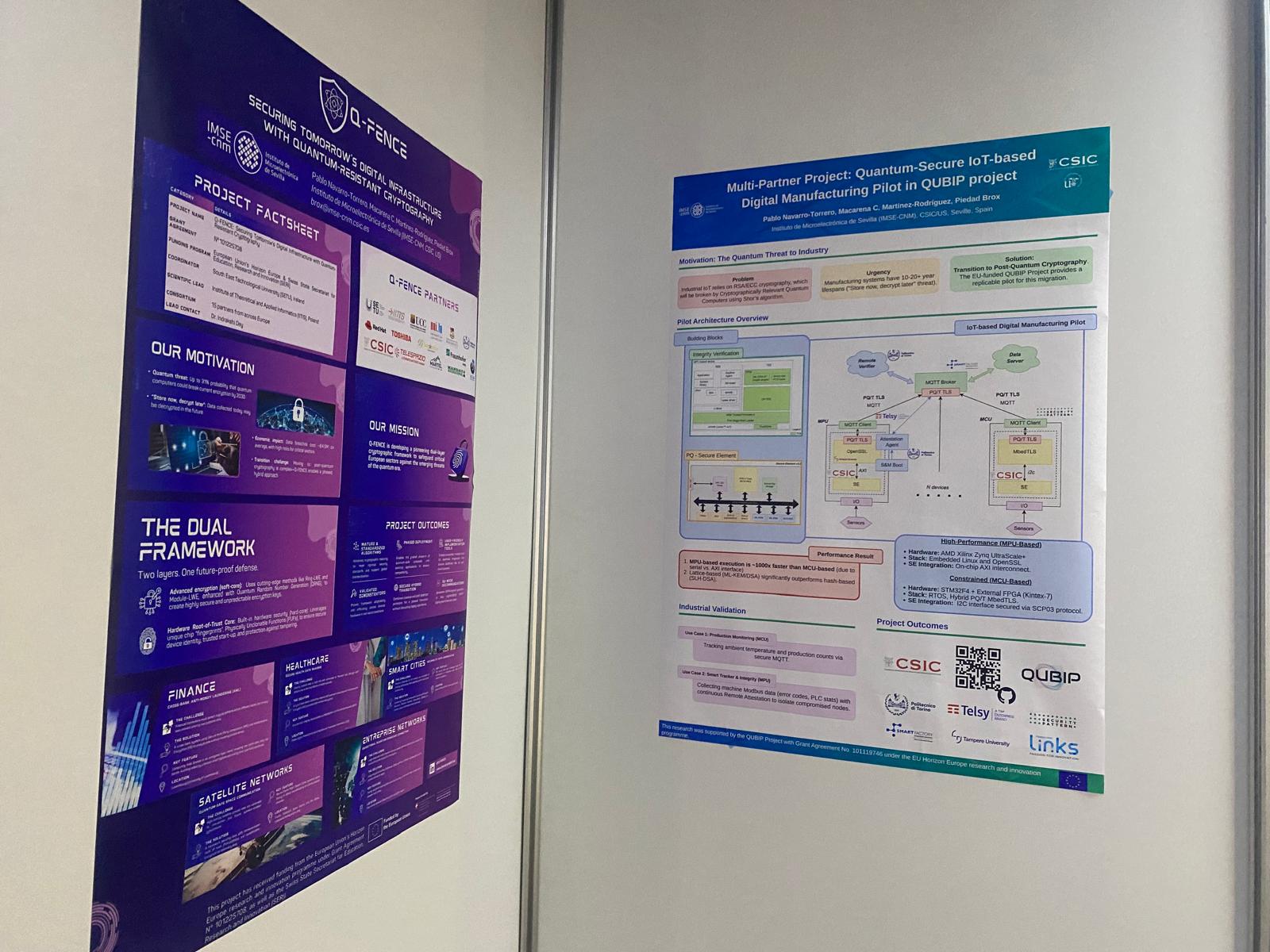
Collaboration for a quantum-safe future
The event highlighted the importance of collaboration between European projects, researchers, and other stakeholders in supporting the adoption of post-quantum cryptography. Sharing technical experience, implementation challenges, and research results can help accelerate progress towards solutions that meet the security and practical requirements of real-world systems.
Through its participation, Q-FENCE contributed to these ongoing exchanges and reaffirmed the importance of coordinated European research and innovation in preparing for the security challenges posed by quantum computing.