
Exploring the Quantum Threat
On 17 October 2026, Q-FENCE hosted the student webinar From Quantum Threat to Quantum-Safe Security: PQC Essentials, bringing together around 50 students from across the project consortium for a two-hour introduction to Post-Quantum Cryptography (PQC).
Designed for students of all academic backgrounds affiliated with Q-FENCE project partners, the webinar provided an overview of the quantum threat and explored the standards, methods and technologies being developed to support the transition towards a quantum-safe digital world.
From Theory to Practical Applications
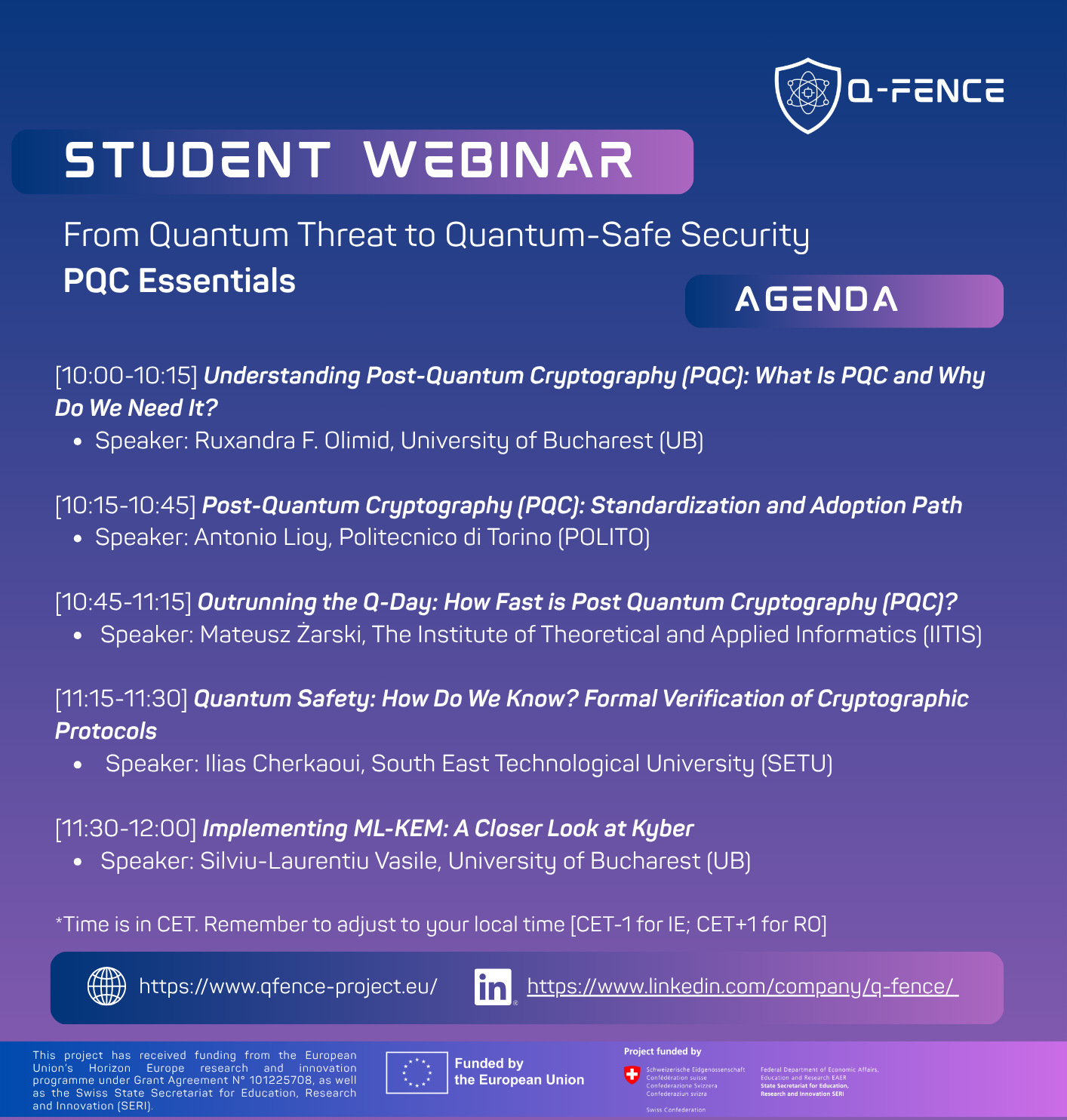
Representatives from four Q-FENCE partners, IITIS, POLITO, SETU and UB, delivered presentations covering both theoretical foundations and practical applications of PQC.
The sessions addressed several key topics:
- PQC fundamentals: Why post-quantum cryptography is needed to protect against the quantum threat.
- Standardisation and adoption: How PQC standards are being developed and adopted.
- Formal verification: How formal verification methods can be applied to PQC.
- Quantum-resistant algorithms in practice: How these algorithms are implemented in code, including their performance considerations.
Explore the agenda below:
Engaging Students Across Academic Levels
The event attracted around 50 participants from several consortium institutions, including Bachelor’s, Master’s and PhD students. Through questions and interactive discussions, participants had the opportunity to test their familiarity with PQC and strengthen their understanding of the topic.
Building Knowledge for a Quantum-Safe Future
By combining fundamental concepts with practical insights, the webinar supported the teaching and learning of post-quantum cryptography among university students. It also contributed to raising awareness of the technologies and approaches needed to address emerging quantum security challenges.