
Q-FENCE
  • Home
  • The Project
    • About the project
    • Motivation
    • Objectives
    • Goals & wider impact
  • Use Cases
    • Finance
    • Healthcare
    • Smart Cities
    • Satellite Networks
    • Enterprise Networks
  • Consortium
  • Results & Resources
  • Q-FENCE Explained
  • Blog
  • News
  • Events
    • Future Events
    • Past Events
  • Contact
  • LinkedIn
  • ZENODO
  • YouTube Link
Select Page
How cryptography can help keep financial transactions secure

How cryptography can help keep financial transactions secure

by Anna Brékine | Oct 29, 2026 | blog

How Q-FENCE can help protect financial data in the digital age and explore ways for banks to detect money laundering together, while keeping customers’ data private. Every time you pay rent, receive your salary or send money to a friend, your bank invokes a...
Introducing the Q-FENCE Cybersecurity Awareness Campaign

Introducing the Q-FENCE Cybersecurity Awareness Campaign

by Anna Brékine | Oct 27, 2026 | news

Understanding Quantum. Advancing Cybersecurity. As quantum technologies advance, preparing for their impact on cybersecurity is becoming increasingly important. But what does the quantum transition mean for the digital services we rely on every day? To explore these...
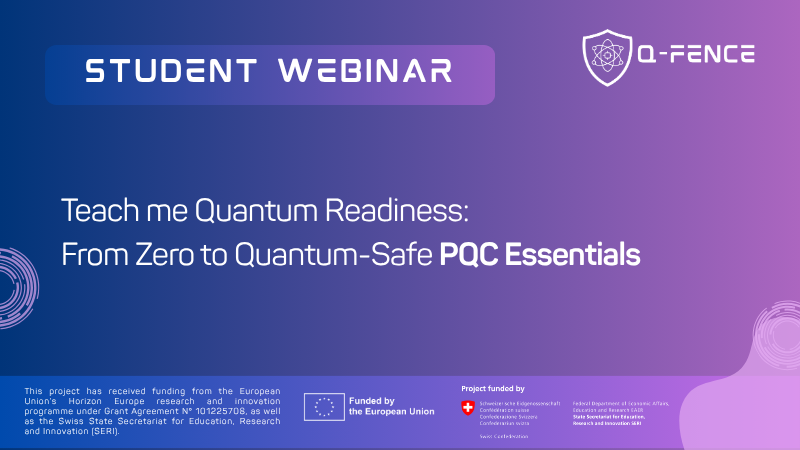
Q-FENCE Student Webinar Introduces Post-Quantum Cryptography Essentials

Q-FENCE Student Webinar Introduces Post-Quantum Cryptography Essentials

by Anna Brékine | Oct 26, 2026 | news

Exploring the Quantum Threat On 17 October 2026, Q-FENCE hosted the student webinar From Quantum Threat to Quantum-Safe Security: PQC Essentials, bringing together around 50 students from across the project consortium for a two-hour introduction to Post-Quantum...
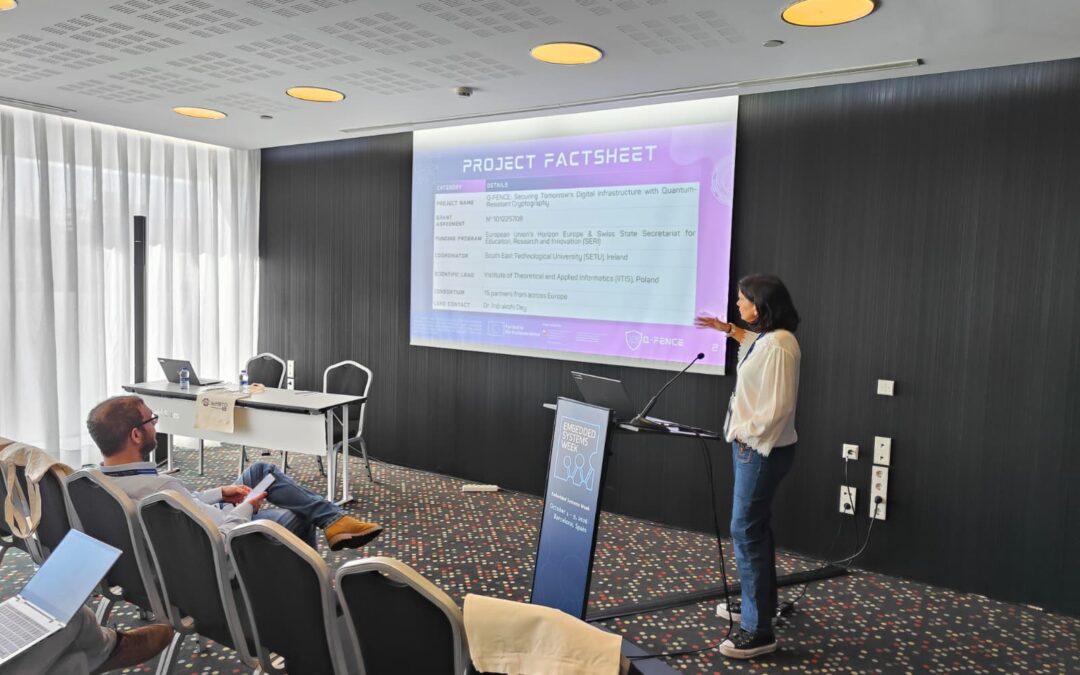
Q-FENCE Presented at European Workshop on Post-Quantum Cryptography Migration

Q-FENCE Presented at European Workshop on Post-Quantum Cryptography Migration

by Anna Brékine | Oct 14, 2026 | news

Piedad Brox, from the Instituto de Microelectrónica de Sevilla (IMSE-CNM, CSIC/US), presented the Q-FENCE project during the Workshop on European Efforts for Post Quantum Cryptography Migration and Standardisation in Embedded Systems, held on 9 October 2026 as a side...
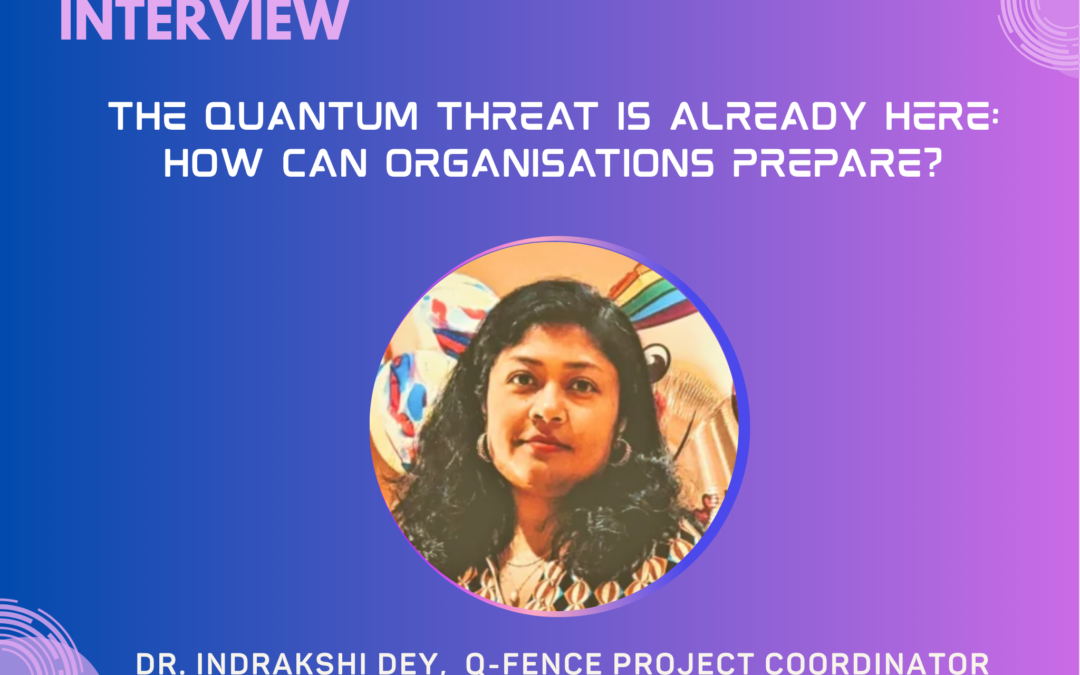
The Quantum Threat Is Already Here: How Can Organisations Prepare? – Interview with Indrakshi Dey, Q-FENCE project coordinator

The Quantum Threat Is Already Here: How Can Organisations Prepare? – Interview with Indrakshi Dey, Q-FENCE project coordinator

by Anna Brékine | Oct 14, 2026 | news

The transition to quantum-resistant cybersecurity is no longer just a question for the future. Although quantum computers capable of breaking today’s widely used encryption are not yet available at the necessary scale, sensitive information intercepted today...

« Older Entries

Recent Posts

  • How cryptography can help keep financial transactions secure
  • Introducing the Q-FENCE Cybersecurity Awareness Campaign
  • Q-FENCE Student Webinar Introduces Post-Quantum Cryptography Essentials
  • Q-FENCE Presented at European Workshop on Post-Quantum Cryptography Migration
  • The Quantum Threat Is Already Here: How Can Organisations Prepare? – Interview with Indrakshi Dey, Q-FENCE project coordinator

Recent Comments

  1. How cryptography can help keep financial transactions secure - Q-FENCE on The Quantum Time Bomb: Understanding the “Harvest Now, Decrypt Later” Cyber Threat
  2. What Is Post-Quantum Cryptography and Why It Matters - Q-FENCE on The Quantum Time Bomb: Understanding the “Harvest Now, Decrypt Later” Cyber Threat

Home

The Project

Use Cases

Consortium

Results & Resources


Q-FENCE Explained

News

Events

Contact

Privacy & Cookie Policy

Funded by EU logo
Funded by Switzerland logo

Acknowledgement: “This project has received funding from the European Union’s Horizon Europe research and innovation programme under Grant Agreement N° 101225708, as well as the Swiss State Secretariat for Education, Research and Innovation (SERI).”

Disclaimer: “Views and opinions expressed are however those of the author(s) only and do not necessarily reflect those of the European Union. Neither the European Union nor the granting authority can be held responsible for them.”